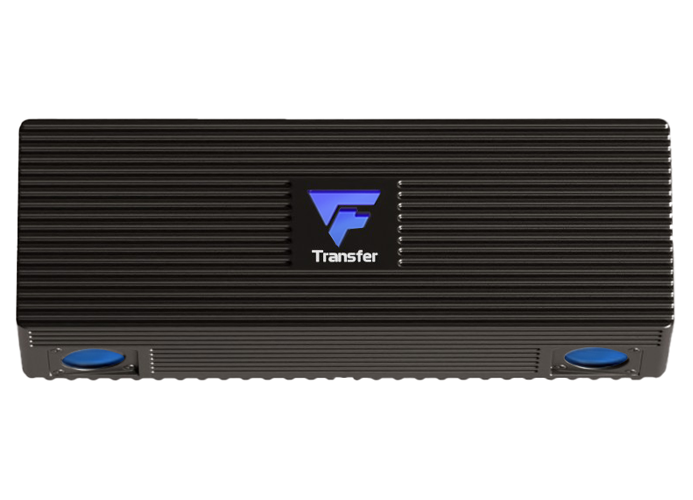
In the realm of industrial automation, large-scale applications—such as depalletizing massive logistics packages, inspecting automotive components, or handling randomly stacked bins of medium-to-large parts—require a paradoxical balance. The vision system must offer a massive Field of View (FOV) to scan the entire workspace quickly, yet it must simultaneously maintain high-precision measurement typically associated with small, focused scanners. This challenge of combining ultra-large spatial coverage with sub-millimeter accuracy is addressed by advanced industrial 3D cameras utilizing optimized structured light. The Epic Eye Pixel Pro from Transfer3D is engineered precisely to bridge this gap, leveraging cutting-edge structured light technology to deliver unparalleled flexibility and performance in wide-area applications.
The Engineering Challenge: Field of View vs. Precision
For B2B integrators and automation engineers, the trade-off between FOV and precision is a persistent hurdle. Most 3D vision technologies face a fundamental limitation: as the measurement range increases, the accuracy inherently decreases. Time-of-Flight (ToF) cameras, for instance, cover huge areas quickly but often lack the necessary resolution and precision for critical tasks like accurate robot positioning or meticulous quality inspection, where measurement errors must be minimized. Conversely, cameras built for very small FOVs achieve high precision but cannot cover large areas efficiently.
Solving this requires a structured light scanner specifically designed to optimize the projection geometry over a wide area while maintaining the integrity of the data points. This is achieved through a meticulous balance of the internal baseline, projection lens quality, and high sensor resolution, ensuring that the light patterns—the core data carriers—remain sharp and measurable across the entire expansive scene. The ideal camera for this medium-to-large working distance must be capable of generating a dense, detailed point cloud over several square meters in a single capture, ensuring that the robotic system receives the comprehensive spatial awareness it needs to execute complex tasks efficiently and reliably.
The Structured Light Scanner Solution: Maximizing Coverage and Accuracy
The Epic Eye Pixel Pro achieves its signature balance by optimizing the structured light scanner method for medium-to-large object handling. Structured light works by projecting known patterns (like fringe stripes) onto an object and calculating 3D coordinates based on the deformation of those patterns.1 To deliver both a large FOV and high precision, the system employs several key engineering features: The first is Optimized Baseline and Optics, where the Epic Eye Pixel Pro uses a strategically designed baseline (170 mm) tailored for its target working range (600-1500 mm); this geometry ensures that the triangulation angles are wide enough to provide robust depth data across the large scene without inducing excessive errors.
The second feature is High-Resolution Projection and Sensor, as the system utilizes a high-resolution sensor (2.3 MP) and a high-quality projection engine to generate and capture finely detailed patterns, guaranteeing that even across a vast area, the individual data points in the resulting point cloud are dense and unambiguous. The third crucial aspect is Advanced Filtering and Calibration, involving sophisticated internal algorithms that continuously calibrate the system and filter out noise caused by ambient light or subtle material variations, such as semi-transparent objects or highly reflective black parts, which is crucial for maintaining the advertised accuracy across the entire field of view. By focusing the optical and algorithmic design on this specific working range, the Epic Eye Pixel Pro can efficiently scan a large volume while delivering sub-millimeter measurement quality, which is essential for accurate robotic guidance systems.
Precision Engineering: The Epic Eye Pixel Pro Specifications
The Epic Eye Pixel Pro is designed as a monocular structured light scanner that delivers the industry-leading performance required by B2B automation tasks like assembly, bin picking, and large-scale depalletizing. Its verified specifications directly confirm its capability to combine large coverage with superior measurement quality:
Optimal Working Distance: 600-1500 mm, which defines the ideal range for medium-to-large workspace applications without requiring excessive mounting height.2
Far FOV (Field of View): 1410 x 860 mm @ 1.5m, confirming the ultra-large coverage area and providing substantial spatial awareness, often the largest FOV among comparable products in this working range.
Precision: 0.1 mm @ 1.1m, demonstrating the sub-millimeter precision achievable mid-range, a critical requirement for precise robot guidance and quality control.3
Typical Capture Time: 0.2s ~ 0.7s, ensuring rapid data processing to maintain rapid cycle times in high-throughput production environments.
These metrics, sourced directly from the product data sheet, highlight the Epic Eye Pixel Pro’s strength: it offers immense coverage while maintaining the precise data integrity expected from a high-end 3D sensor. This allows a robot to operate efficiently over a large bin of parts or pallet, reducing the number of scans required and significantly accelerating the overall automation cycle. The integrated LED light source and robust IP65 rating further ensure durability and reliable performance in demanding industrial settings.
Application and Competitive Advantage with Transfer3D
For industrial integrators, the ability to deploy a single, reliable structured light scanner that covers an immense workspace with high confidence is a massive competitive advantage. Transfer3D ensures that the Epic Eye Pixel Pro is not just a piece of high-performance hardware, but a seamless component of an intelligent vision ecosystem.
This camera’s high-fidelity 3D data enables robust solutions for difficult automation scenarios: quickly and accurately locating irregularly shaped parts in large containers, guiding precise robot movements for complex loading and unloading operations, and executing meticulous inspection of large, complex assemblies where small defects could lead to massive costs.4 By integrating the Epic Eye Pixel Pro with the Transfer3D 3D Vision Guidance Platform and proprietary ATOM algorithms, manufacturers gain access to a reliable, flexible solution that minimizes errors and maximizes throughput across the most demanding wide-area applications. Choosing a system specifically engineered to conquer the FOV-vs-Precision trade-off ensures that large-scale automation projects deliver on their promise of high quality and operational efficiency.
Conclusion
In conclusion, the seemingly contradictory goals of achieving an ultra-large Field of View and maintaining high-precision measurement are masterfully reconciled by optimized structured light scanner technology. The Transfer3D Epic Eye Pixel Pro embodies this advancement by utilizing a precise baseline, high-resolution optics, and intelligent software algorithms, enabling it to deliver sub-millimeter accuracy over a broad working range of 600-1500 mm.5 For B2B customers engaged in logistics, automotive, and large-scale manufacturing, this unique balance is the key to unlocking the full potential of robotic automation, ensuring that even complex, wide-area tasks are executed with both speed and uncompromising precision.
