The door lock is the most fundamental component of any security strategy, serving as the first line of defense for a residence. For multi-family properties, the operation and reliability of the apartment door lock directly impact tenant safety, operational efficiency, and legal compliance. While traditional locks rely on a purely mechanical process that has remained largely unchanged for a century, the modern demands of community living—including high turnover rates, the need for instantaneous access management, and enhanced security monitoring—have pushed the industry toward sophisticated electronic solutions. Understanding how do apartment door locks work today means exploring not only the basic physics of the mechanical lock, but also the revolutionary digital mechanisms employed by leading suppliers of apartment smart locks like Trudian. This transition from metal tumblers to networked actuators represents the single greatest shift in residential access control technology.
The Anatomy and Limitations of the Traditional Mechanical Lock
A typical traditional apartment door lock operates on the principle of a pin tumbler cylinder mechanism. This system comprises three key elements: the cylinder, the pins, and the deadbolt or latch mechanism. When the door is locked, a set of small metal pins, known as driver pins and key pins, are misaligned across the shear line—the boundary between the stationary outer casing and the rotating inner cylinder. This misalignment effectively prevents the cylinder from turning, locking the door securely.
The operation is entirely reliant on the physical key. When the correct key is inserted, the unique pattern of cuts on the key’s blade lifts the pins precisely to the shear line. This alignment creates a smooth channel, allowing the cylinder to rotate freely, which, in turn, retracts or extends the deadbolt or latch. While simple and reliable from a sheer endurance perspective, this mechanism carries significant inherent weaknesses. The reliance on physical keys makes the lock vulnerable to key duplication, key loss, and key-based compromises like picking and bumping, creating severe operational and security liabilities for property management. Moreover, managing access for maintenance staff, new residents, or contractors becomes a logistical nightmare, requiring expensive and time-consuming rekeying when keys are lost or tenants move out. This simple, elegant mechanical function is precisely what has made it obsolete in the face of modern security challenges, paving the way for advanced apartment smart locks to take over.
The Digital Transformation: How Apartment Smart Locks Operate
The fundamental principle of locking a door—moving a bolt—remains the same, but the apartment door lock execution changes entirely with smart technology. Apartment smart locks replace the key-operated cylinder with an electronically controlled motor and an actuator. Instead of a key engaging pins, a digital credential engages a sophisticated actuator. This electronic shift solves the problems of key duplication and physical lock manipulation, while also introducing powerful management capabilities.
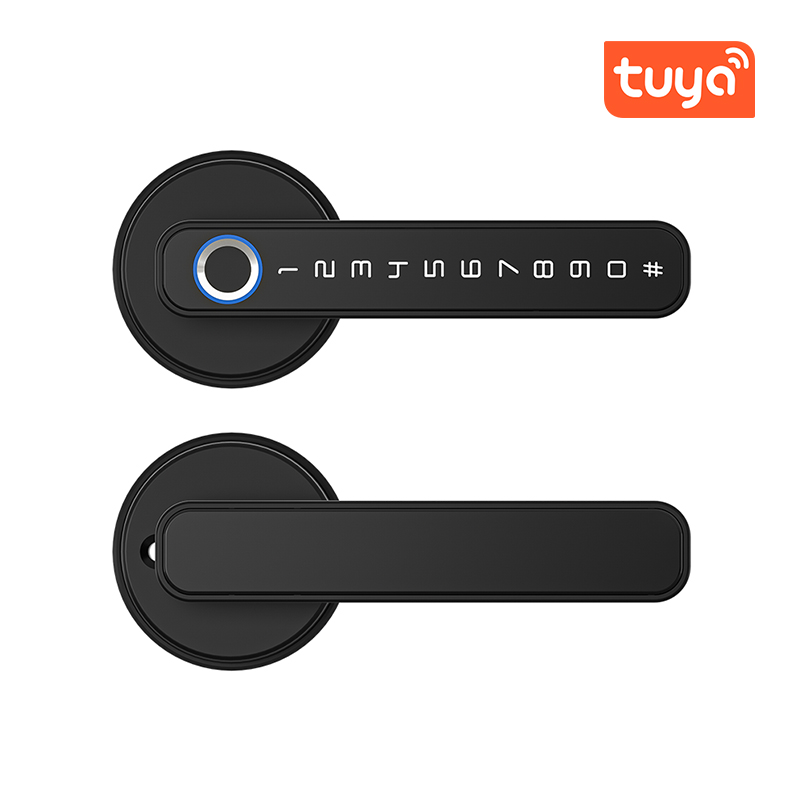
The core operational components of a modern smart lock system, such as those featured in Trudian’s comprehensive product line, center on the digital identification method and the electromechanical response. Access is initiated via one of multiple available electronic credentials: a fingerprint scan, a unique PIN code entered on a touchscreen keypad, a tap of an IC card, or an instruction sent from a mobile application like the integrated Tuya App.
Inside the Mechanism: Trudian’s Digital Lock Operation
When a user presents a valid credential to a Trudian lock, a series of rapid steps occur to grant access. The biometric sensor or keypad first reads the unique digital information. This information is then processed by the lock’s internal, embedded micro-controller, which authenticates the credential against its secure internal database of authorized users. If the credential is valid, the micro-controller sends an electric signal to the internal, precision-geared motor—the actuator. This powerful yet quiet motor turns the drive shaft, which instantly retracts the deadbolt or latch, allowing the door to be opened. This entire electronic process, from scan or code entry to the motor engaging, often takes less than a second, demonstrating superior speed and convenience compared to fiddling with a traditional key.
The locks are typically powered by standard batteries (like AAA or specialized lithium packs) housed within the interior portion of the lock, ensuring low power consumption and long operational life, often lasting several months to over a year. Critically, because these are robust apartment door lock solutions, they incorporate essential fail-safes. When battery voltage dips below a safe threshold, the lock issues a low-power alarm through an integrated voice assistant or the connected mobile application, alerting the user and property management. Furthermore, the electronic operation is always backed up by a traditional mechanical keyhole and cylinder, ensuring that entry is guaranteed even in the event of complete system failure or power depletion—a non-negotiable requirement for fire and safety compliance in multi-family dwellings. This multi-layered approach to access and power management is what distinguishes professional-grade apartment smart locks from simpler consumer models.
Maximizing Operational Efficiency with Smart Access Control
The utility of apartment smart locks extends far beyond the moment of entry, offering property managers robust tools for operational control and enhanced security management. Once a lock is connected via Wi-Fi or Bluetooth, property managers gain the ability to remotely issue, modify, and revoke digital credentials instantly through a centralized software platform. This feature is invaluable during tenant turnover, as the previous resident’s codes and biometrics can be wiped with a single click, immediately securing the unit for the next occupant without the expense, time, or physical effort of changing the lock cylinder.
In summary, the question of how do apartment door locks work has shifted from a question of mechanical physics to one of information technology and electromechanical engineering. The evolution from a simple key and tumbler to a networked digital actuator is a necessity for modern multi-family housing. By investing in high-quality apartment smart locks from a leading smart apartment lock supplier like Trudian, property owners and managers are not just upgrading their doors; they are implementing a comprehensive access control system that boosts efficiency, enhances security, and provides the modern, reliable convenience demanded by today’s residents.
