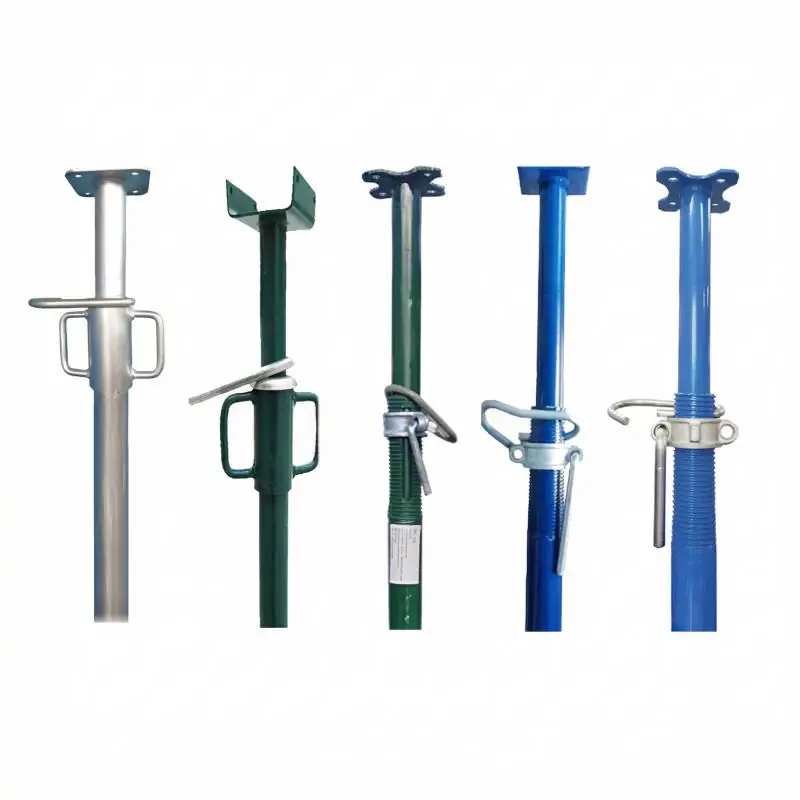
Calculating temporary load distribution during multi-story concrete casting demands absolute structural precision from site engineering teams. Inadequate floor shoring during pour operations poses severe structural risks, as uncured concrete slabs exert massive downward dead weights alongside dynamic construction traffic. Deploying certified steel props for construction provides temporary shoring setups with predictable axial load capacities, safeguarding lower floor slabs from structural deflection until poured concrete reaches specified curing strength.
Procurement specialists collaborating with technical suppliers like Rongze evaluate tube thickness parameters, thread pitch design, and pin mechanics to match support inventory with exact site engineering demands.
Axial Load Transfer and Structural Mechanics
Transferring elevated slab dead weights down to lower support floors relies on pure axial compression along vertical steel tubes. Inner and outer telescopic tubes manufactured from high-grade structural steel withstand significant vertical compression without experiencing lateral buckling under load limits. Threaded collar assemblies allow fine height adjustments, enabling installation crews to pre-stress support columns against overhead soffits accurately.
Uncontrolled eccentric loading occurs when support columns tilt away from true plumb alignment, drastically reducing maximum permissible load limits. Concentrated point loads passing through top baseplates pass directly down the primary tube axis to wide bottom footplates, diffusing forces across supporting floor slabs. Properly aligned shore setups protect cured lower floors from localized cracking, ensuring safe weight dispersion across multi-level shoring matrices.
Height Adjustment Mechanics and Operational Precision
Adapting temporary shoring to varying ceiling heights requires reliable height modification hardware that maintains structural integrity under full load. Inner tubes feature drilled pin holes spaced at regular vertical intervals, allowing rough height setting via high-tensile steel locking pins. Fine height calibration occurs by turning a heavy-duty cast nut along external rolled threads on the outer tube body.
Self-cleaning coarse threads prevent concrete slurry and site debris from binding adjusting collar nuts during field operations. The Adjustable Steel Props are designed to provide reliable temporary support for slabs, beams, ceilings, and formwork systems in construction projects. Precise height adjustment mechanics allow site crews to set floor shoring quickly, accelerating formwork leveling before rebar placement begins.
Substrate Interface and Baseplate Dynamics
Distributing vertical axial forces safely onto lower floor slabs requires robust baseplate configurations at both top and bottom support ends. Heavy-duty square or flower-shaped baseplates provide wide bearing surface areas that prevent localized concrete crushing under heavy dead loads. Centrally welded baseplates feature pre-drilled nail holes, enabling workers to secure support bases firmly to timber sill boards or concrete decks.
Using wooden soleplates under bottom baseplates diffuses concentrated point loads over broader areas of green concrete slabs. Top baseplates support primary timber or aluminum formwork stringers, maintaining flat contact surfaces to prevent beam tilting during concrete pouring operations. Proper substrate interface preparation eliminates post-settlement, keeping overhead slab forms level throughout pouring and vibration sequences.
Shoring Matrix Integration and Lateral Stability
Independent vertical support columns require cross-bracing integration when unbraced height ratios increase across high-bay ceiling applications. Unbraced vertical posts remain susceptible to lateral sway under horizontal wind loads or dynamic concrete buggy movement. Connecting adjacent support posts using tripod bases and scaffold tube clamps transforms isolated posts into a stable, self-supporting shoring matrix.
Tripod accessories hold vertical columns upright during initial layout setup, enabling single workers to position overhead formwork stringers safely. Manufactured from high-quality steel with adjustable height settings, they offer excellent load capacity, durability, and easy installation for residential, commercial, and industrial applications. Integrating rigid lateral bracing prevents structural displacement, maintaining spatial stability across large-scale commercial floor casting operations.
Environmental Resistance and Surface Finishing Methods
Shoring hardware operating on active job sites faces continuous exposure to moisture, concrete slurry, and abrasive handling during transport. Unprotected steel surfaces develop rust quickly, compromising tube wall thickness and seizing adjustment threads over repeated deployment cycles. Applying protective coatings, such as hot-dip galvanization or durable painted finishes, shields structural steel against environmental degradation.
Hot-dip galvanization coats both internal and external tube walls with a metallurgical zinc barrier, providing long-term corrosion resistance for rental fleets. Painted or pre-galvanized surface finishes offer cost-effective corrosion protection for standard indoor residential builds. Selecting durable adjustable steel props featuring protective surface finishes extends equipment service lifecycles, maintaining published load capacities across multi-year construction deployments.
Asset Lifecycle Management and Jobsite Safety Compliance
Managing temporary shoring fleets across multiple building developments requires rigorous inspection routines and quality compliance standards. Deformed inner tubes, worn locking pins, or stripped collar threads weaken axial load capacities, creating severe safety risks if deployed under full pour loads. Systematic maintenance schedules involve checking pin hole alignment, cleaning threaded collars, and replacing damaged components between project uses.
Procuring certified steel props for construction manufactured under strict quality controls ensures compliance with international shoring safety regulations. Clear load capacity labeling on outer tubes simplifies engineering audits on site, enabling safety supervisors to verify shoring density before concrete placement commences. Relying on engineered temporary support solutions supplied by established specialists like Rongze equips construction teams with certified load performance, operational versatility, and dependable site safety across global civil builds.
Technical Performance Summary
Achieving structural reliability during elevated concrete casting requires selecting temporary shoring equipment engineered for high axial strength, simple height calibration, and long-term durability. Utilizing heavy-duty adjustable steel props provides site managers with flexible floor support that adapts to varying ceiling heights while maintaining rigid vertical alignment.
Protective surface finishes safeguard component wall integrity against aggressive jobsite moisture, preserving published load ratings through repeated deployment cycles. Partnering with technical equipment suppliers like Rongze equips construction managers with certified shoring inventory, precise dimensional control, and dependable safety performance across commercial, residential, and industrial developments.
