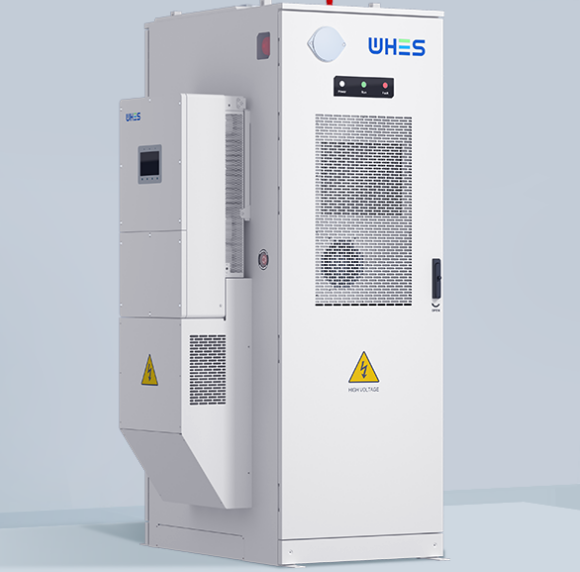
WHES, a manufacturer specializing in scalable energy storage systems for installers, distributors, and energy solution providers, develops integrated platforms for both grid-connected and independent power applications. In modern energy system design, the decision between on-grid and off grid energy storage configurations directly influences system architecture, operational flexibility, and investment planning. As demand for solar battery storage continues to grow across commercial and industrial sectors, system integrators must carefully evaluate which deployment model best aligns with project requirements and grid conditions.
System Functionality and Grid Interaction
On-grid systems primarily operate in coordination with the utility network, enabling energy export, peak shaving, and optimized self-consumption. In contrast, off grid energy storage systems are designed to operate independently of the utility grid, ensuring continuous power supply in remote locations or areas with unstable grid access.
WHES systems support both operational modes through a unified architecture. With 4 MPPTs for solar optimization and support for up to 2 times photovoltaic oversizing, the platform enhances solar battery storage efficiency by maximizing energy capture under varying environmental conditions. Additionally, <10 ms EPS switching ensures rapid transition during grid interruptions, making the system suitable for hybrid and backup applications.
Safety Design and Operational Reliability
Safety and reliability are critical considerations in both on-grid and off grid energy storage deployments. WHES systems integrate four-level active and passive fire protection mechanisms, along with optional AFCI functionality to enhance electrical safety. The battery cabinet is rated IP55, while the inverter is rated IP66, ensuring durability in demanding environmental conditions.
The system utilizes 280Ah long-life lithium cells with up to 8,000 cycles, providing extended operational stability for solar battery storage applications. It also supports 100% unbalanced output, half-wave loads, and surge loads, ensuring compatibility with diverse electrical equipment commonly found in commercial and industrial installations.
Application Scenarios and System Selection Strategy
For system integrators, selecting between on-grid and off grid energy storage depends on grid reliability, energy independence requirements, and project scalability. WHES supports parallel operation of up to six units in both configurations, enabling flexible system expansion. By combining modular solar battery storage with robust safety engineering and hybrid functionality, WHES provides adaptable solutions that allow energy designers to match system architecture precisely to application needs.
