Energy management has become an important consideration for many commercial facilities. Businesses are looking for practical ways to improve energy flexibility, manage electricity costs, and support renewable energy integration. A properly designed battery system can help companies store electricity during suitable periods and use it when needed. When evaluating a storage system, buyers usually focus on battery specifications, safety standards, installation methods, and long-term operation. This article explains the key points of commercial battery storage and how different systems can support business applications.
Understanding the Role of Commercial Battery Storage Solutions
Commercial battery storage solutions are designed for businesses that need more flexible energy management. These systems can be used with solar power systems, grid connections, or other energy sources to improve energy usage efficiency. Unlike small residential products, commercial systems need to consider higher capacity requirements, installation conditions, and continuous operation needs.
For industrial buildings, retail facilities, and commercial sites, energy demand can change throughout the day. Battery storage allows companies to store available power and manage electricity usage according to operational needs. This approach can support applications such as peak demand management, backup power preparation, and renewable energy utilization.
Key Specifications of Battery Storage Systems
Selecting commercial battery storage requires careful review of technical specifications. Important factors include battery chemistry, cycle performance, safety certifications, and system compatibility. Lithium iron phosphate (LiFePO4) batteries are commonly used in many energy storage applications because of their stable characteristics and long service life.
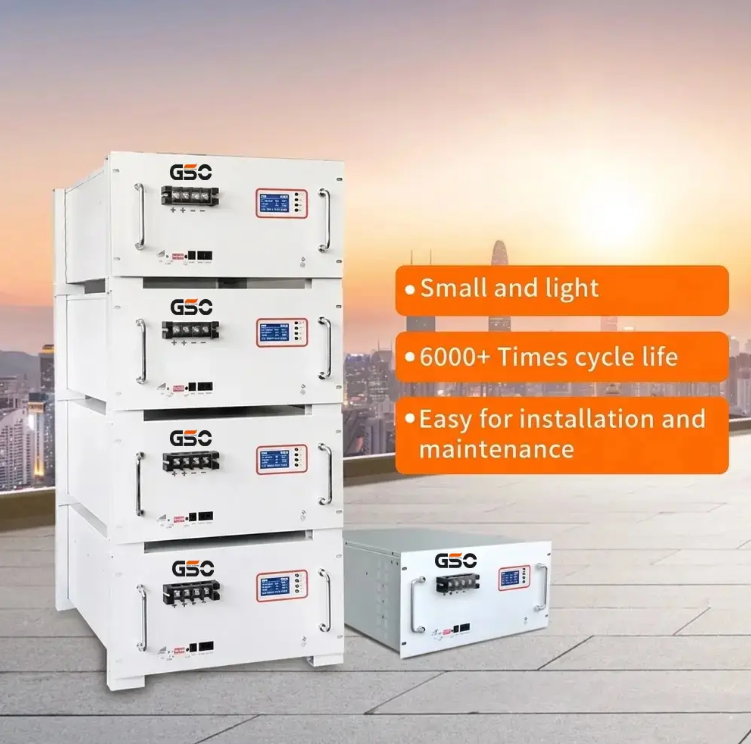
A representative product from GSOpower is the Rack Type Lithium Iron Phosphate Battery, GBP-R Series. This rack-mounted battery uses cells from suppliers such as REPT and EVE. The series features a cycle rating of 6000+ times, a designed life of 10 years, and certifications including CE, MSDS, and UN38.3. These specifications make it suitable for business energy storage projects that require stable operation.
Compact Design for Easier Installation
Space utilization is an important factor for commercial energy projects. Traditional battery solutions may require more installation space and create challenges during transportation or replacement. A compact structure can help simplify system deployment, especially in locations with limited equipment areas.
The GBP-R Series developed by GSOpower uses a slim rack-mounted design with high energy density. Compared with equivalent lead-acid configurations, this battery system is lighter and smaller. The design helps simplify shipping, rack installation, and future replacement work for system integrators and project operators.
Smart Communication and System Integration Features
Modern energy storage projects often need communication between batteries, inverters, and energy management systems. Reliable communication helps installers configure systems more efficiently and allows operators to monitor battery conditions during daily operation.
The GBP-R Series includes an on-screen inverter protocol selector. Its built-in LCD display provides real-time battery status information and allows installers to select inverter communication protocols directly through the screen. This function reduces dependence on additional configuration tools and supports smoother installation processes for different project environments.
Long Cycle Performance for Business Applications
Battery lifespan is a major consideration for companies planning long-term energy investments. A storage system with stable cycle performance can help reduce replacement frequency and support predictable operation over time. Businesses usually evaluate cycle life together with depth of discharge, battery consistency, and maintenance requirements.
In terms of design performance, the GBP-R Series uses LiFePO4 chemistry with a 5,000+ cycle design life at 80% depth of discharge. The battery structure focuses on high cell consistency across the pack, which helps provide balanced degradation and predictable performance throughout its service period. These characteristics are important when planning commercial battery storage solutions for regular daily cycling.
Common Use Cases for Commercial Energy Storage
Commercial battery systems can be applied in different business environments. Manufacturing facilities may use storage systems to manage electricity consumption during high-demand periods. Office buildings and commercial properties can combine batteries with solar systems to improve energy utilization. Renewable energy projects may also use storage equipment to balance power generation and consumption.
For companies developing these projects, GSOpower provides battery storage products that fit different commercial application requirements. Their rack-mounted lithium battery solutions are designed for integration with compatible energy systems, helping distributors, installers, and project partners develop suitable storage configurations.
Factors to Consider Before Choosing a System
When selecting commercial battery storage, businesses should evaluate several technical and practical factors. Battery capacity should match the project’s energy requirements. Compatibility with inverters and energy management platforms is also important. In addition, certifications, installation space, and maintenance plans should be reviewed before deployment.
A reliable evaluation process helps project developers select a system that matches actual operating conditions. Instead of focusing only on battery capacity, buyers should consider the complete system design, including safety features, communication functions, and long-term service expectations.
Supporting Future Energy Management Needs
The demand for flexible energy solutions continues to grow as more businesses explore renewable energy and smarter power management methods. Storage systems provide a connection between power generation, electricity consumption, and energy planning.
By combining LiFePO4 battery technology, compact rack-mounted structures, and practical monitoring functions, commercial battery storage solutions can support various commercial projects. Products such as the GBP-R Series show how battery design, safety standards, and integration features work together to meet the needs of modern energy applications.
