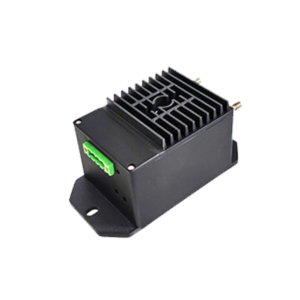
When your industrial application demands current measurement accurate to within a microscopic fraction of a percent—think battery management systems (BMS), precision power supplies, or calibration labs—a basic open-loop Hall-effect sensor falls short. In these critical environments, measurement error translates to compromised safety. This is where the fluxgate current sensor earns its place. In this guide, we break down what a fluxgate current sensor is, its working principle, and why engineers choose it over Hall and shunt alternatives for high-precision DC and AC measurement.
Understanding High-Precision Fluxgate Current Sensors
At its core, a fluxgate current sensor is a closed-loop, magnetically compensated transducer. It measures current by detecting and actively nulling the magnetic field produced by the primary conductor under test. Unlike a traditional shunt resistor, which introduces an unwanted voltage drop, a fluxgate transducer provides complete galvanic isolation between the high-power circuit and sensitive output electronics. Unlike a standard Hall-effect sensor, it achieves exceptionally low offset, minimal temperature drift, and phenomenal linearity.
The result is an industrial-grade sensor capable of resolving remarkably small currents with excellent long-term stability—often measured in parts per million (ppm). This precision makes it the standard for electric-vehicle (EV) battery packs, grid-tied energy storage, and laboratory equipment. Utilizing advanced multi-point zero-flux technology, modern transducers satisfy the rigorous demands of today’s power electronics industry. To see the full lineup, explore the fluxgate current sensors from Hangzhi Precision.
How Does a Fluxgate Current Sensor Work?
The fundamental working principle rests on a highly responsive electronic feedback loop designed to maintain a state of zero magnetic flux. Here is the operational sequence:
- Magnetic Field Generation:As primary electrical current flows through the central conductor, it creates a proportional magnetic field.
- The Fluxgate Probe:A highly permeable toroidal magnetic core, wrapped with an excitation coil, is placed within this primary field. An AC drive signal repeatedly drives this core into saturation in positive and negative directions.
- Second-Harmonic Detection:When exposed to an external DC or low-frequency AC magnetic field, the natural symmetry of the core’s saturation cycle breaks. This asymmetrical imbalance manifests as a characteristic even-harmonic signal—primarily the second harmonic—picked up by a dedicated sense coil.
- Active Nulling:An internal signal processing circuit detects this distortion and drives a compensating (secondary) current through a feedback winding. It adjusts this current until the net magnetic flux within the core returns to absolute zero. The magnitude of this compensating current perfectly replicates the primary current.
- Final Output Conversion:A high-precision internal burden resistor converts this feedback current into a clean output signal. Depending on the model, this is delivered as a high-precision digital signal (RS232 / RS485 / CAN) or, on voltage-transducer variants, as a ±10 V analog output.
Because measurement relies on forcing the core to zero flux rather than passively reading an induced voltage, the sensor is immune to common error sources. Temperature drift, intrinsic core nonlinearity, and supply variations are virtually eliminated.
Key Advantages for B2B Engineering Applications
Comparing transducer technologies makes the fluxgate advantage clear across several critical metrics:
| Advantage | What the Specs Show |
| High Accuracy | Total error as low as 10 ppm (0.001%), with 0.02% / 0.05% options—far tighter than open-loop Hall devices. |
| Low Offset and Drift | Zero drift of just 2 ppm and temperature drift as low as 0.1 ppm/°C, vital for accurate DC monitoring. |
| Wide Bandwidth | The closed-loop architecture accurately measures DC and AC currents with consistent gain, functioning flawlessly up into the hundreds of kHz (up to 500 kHz on precision models). |
| Galvanic Isolation | Primary power sides and secondary measurement sides are fully separated, protecting delicate downstream electronics from high-voltage spikes. |
| Excellent Linearity | Maintains near-perfect proportionality between primary current and output signal, even at very low current levels. |
These robust properties make fluxgate technology the natural choice when measurement error risks safety margins—for example, in high-voltage BMS state-of-charge estimation or commercial energy-storage systems.
Fluxgate vs. Hall-Effect: The Trade-off
If your engineering team is weighing a fluxgate versus a Hall-effect sensor, the primary trade-off is straightforward. Hall sensors are cheaper and adequate for rough monitoring. However, fluxgate sensors easily win whenever uncompromising precision, robust stability, and ultra-low thermal drift are non-negotiable. Industrial test benches, advanced EV powertrains, and critical grid equipment absolutely rely on fluxgate precision to function optimally.
Who Builds Reliable Fluxgate Sensors?
Not every component supplier can hit the tight tolerances that true fluxgate measurement demands. It takes highly specialized in-house magnetic-core design capabilities, automated calibration processes, and rigorous quality control. Hangzhi Precision is an industry-leading manufacturer with in-house R&D and manufacturing capabilities, serving the automotive, renewable-energy, medical, and railway / industrial-control sectors worldwide. You can explore their advanced R&D center, international certifications (ISO 9001, IATF 16949, UL, CE, RoHS, EMC), and dedicated engineering team on the about Hangzhi page.
Choosing the Right Sensor & Getting a Quote
When selecting a precision fluxgate current transducer for your next project, pin down these critical specifications first:
- Measured current range (peak and continuous limits)
- Required accuracy levels and thermal drift budget
- Preferred output type (digital RS232 / RS485 / CAN, or analog ±10 V on voltage models)
- Isolation voltage ratings and creepage / clearance distances
- Operating temperature extremes and preferred mounting form factor
If your specific project features unusual mechanical constraints or unique electrical requirements, most reputable manufacturers support customized ranges and tailored housings. The fastest way to secure a technical datasheet or an engineering recommendation is to contact us with your exact application details. A qualified application engineer will match the ideal model from the fluxgate current sensors lineup to your rigorous requirements.
The Bottom Line
A fluxgate current sensor is the go-to solution when your business cannot afford measurement errors. Its advanced closed-loop, zero-flux architecture delivers the unparalleled accuracy, thermal stability, and robust isolation that modern high-power electrified systems depend upon. Understanding this working principle helps you accurately specify and confidently source the right component for your critical industrial applications.
