Petrochemical plants contain process units, storage areas, pipelines, pumps, compressors, and electrical facilities. Power equipment in these sites must work within a carefully planned electrical distribution system. The design also needs to consider fire and explosion risks, fault protection, maintenance access, and environmental conditions. For engineers and project buyers, selecting equipment is therefore not only a matter of voltage and current. The location, load type, protection method, and installation arrangement also need to be considered together.
What Makes Petrochemical Power Distribution Different?
Petrochemical production involves many electrically driven loads. Motors may operate pumps, fans, compressors, and other process equipment. Control systems and instrumentation also require stable electrical connections. A fault in one section can affect connected equipment, so distribution systems need clear protection zones and suitable switching arrangements.
Hazardous areas require additional attention because flammable gases or vapors may be present under specific operating conditions. Electrical equipment is therefore selected according to the area classification and applicable project standards. The switchgear itself is only one part of the system. Cable routing, grounding, protection coordination, and equipment placement also influence overall safety.
Load characteristics should be reviewed before equipment selection. Large motors can produce higher starting currents than their normal operating currents. Sensitive control equipment may have different power quality requirements. Engineers need to calculate these conditions instead of selecting switchgear only from the normal load value.
Key Design Points for Petrochemical Power Supply Systems
When planning petrochemical plant power supply systems, engineers usually start with the plant load list and distribution structure. Medium-voltage incoming power may be distributed through switchgear to transformers, motor control sections, and downstream low-voltage equipment.
Protection coordination is another important step. Circuit breakers and protective devices need settings that match the system short-circuit level and connected loads. Coordination helps isolate a faulted section while keeping unaffected sections available for operation.
Environmental conditions also matter. Petrochemical sites may include outdoor substations, process areas, high-temperature locations, dusty zones, or places with vibration. Equipment selection should reflect the actual installation environment rather than relying only on standard indoor conditions.
Why Medium-Voltage Switchgear Matters
Medium-voltage distribution is commonly used when a facility has substantial electrical loads and requires power to be distributed across different process areas. A medium-voltage switchboard can combine switching, protection, monitoring, and energy distribution functions within a structured cabinet arrangement.
Metal-enclosed construction provides physical separation between internal electrical components and the surrounding environment. Internal compartments can also organize different sections of the equipment. Such arrangements make inspection and maintenance more structured.
Digital functions add another layer of practical value. Monitoring can provide information about equipment status and operating conditions. Depending on the configuration, engineers can use this information for fault diagnosis, condition checks, and maintenance planning.
How Internal Arc Protection Supports Safer Operation
Internal faults can occur because of insulation failure, loose connections, component damage, or other electrical problems. An internal arc can release significant heat and pressure in a short period. Switchgear design therefore needs to consider how such faults are contained.
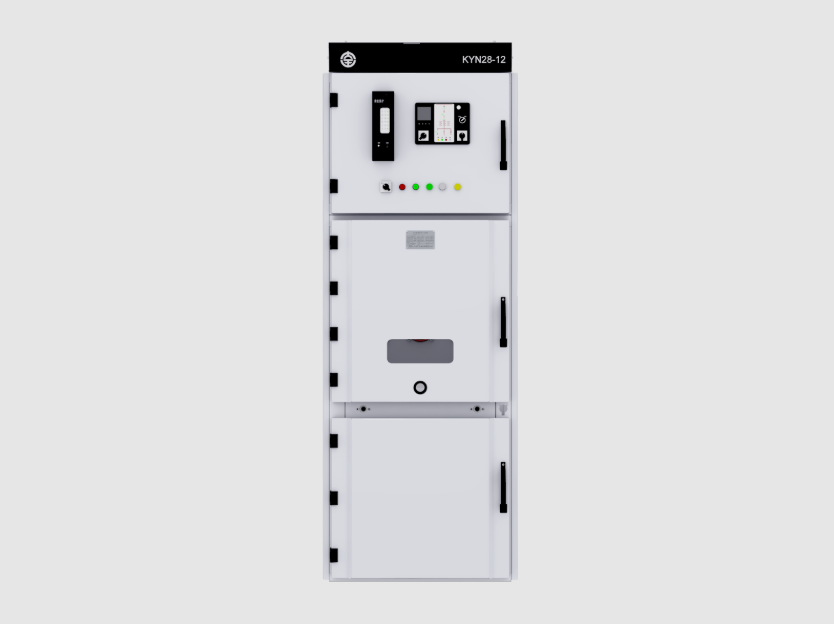
KYN28-12 Digital Switchgear from Daqo Group is an armored metal-enclosed solution for three-phase AC 50Hz systems from 3.6kV to 12kV using a single-busbar arrangement. Its stated functions include energy reception and distribution, control, protection, and monitoring. The product is designed with internal arcing fault withstand capability and a five-fold mechanical interlocking system.
The published product information also lists high seismic resistance at AG5 and intensity 9, together with thermal management features. Its internal arcing fault withstand current is specified as 40 kA for 1 s. These parameters give project engineers concrete technical points to review during equipment selection.
Interlocking and Maintenance Should Be Considered Together
Switchgear safety is not only related to electrical ratings. Mechanical operation also matters because incorrect switching sequences can create serious operating risks. Interlocking systems can restrict certain operations and guide operators through the intended sequence.
The five-fold mechanical interlocking arrangement specified for the KYN28-12 model is relevant to this consideration. The product also uses a modular circuit breaker structure and provides dual-side access for maintenance. These features can influence how maintenance teams plan inspection and equipment replacement inside a plant.
Maintenance planning should start during project design. Engineers need to check access space, cable entry, component replacement routes, and isolation procedures. A compact cabinet may save floor space, but sufficient working clearance still needs to be provided for safe maintenance activities.
Matching Equipment With Plant Conditions
Selecting switchgear for a petrochemical project requires more than comparing catalog ratings. Voltage, frequency, short-time withstand current, peak withstand current, busbar current, enclosure protection, and internal arc performance should all be reviewed against project requirements.
For example, the published KYN28-12 data includes a 12 kV insulation voltage, a 42 kV/1 min power-frequency withstand voltage, and a 75 kV lightning impulse withstand voltage, and 50kA/4s short-time withstand current. The busbar rated current is listed as up to 5000A.
Project teams should also check applicable national, utility, and site-specific standards before finalizing the configuration. The product information states that the KYN28-12 complies with applicable State Grid and China Southern Power Grid standards and has passed national type tests. Such documentation can be useful during technical evaluation and project approval.
From Equipment Selection to System Planning
Power distribution equipment works as part of a larger electrical network. Engineers need to connect switchgear selection with transformers, protection devices, cables, grounding systems, control equipment, and downstream loads. This approach helps avoid mismatches between individual components.
For B2B projects, supplier capability can also affect implementation. Daqo Group provides electrical distribution products across medium- and low-voltage equipment, transformers, components, and related energy solutions. Its product portfolio covers sectors including petroleum refining and chemicals, data centers, energy storage, and power-related infrastructure.
A practical evaluation should therefore combine technical parameters with installation conditions, delivery requirements, service arrangements, and future expansion plans. This is particularly useful for large industrial projects where equipment replacement after commissioning can be difficult.
Building a Practical Electrical Protection Strategy
Petrochemical facilities require electrical systems that match both process demands and hazardous-site conditions. Engineers should begin with load calculations, area classification, fault levels, and protection coordination. Medium-voltage switchgear can then be selected according to the required voltage, current, arc resistance, interlocking, monitoring, and environmental performance.
The right approach is not simply to select a cabinet with a suitable voltage rating. It is to examine how the equipment fits into the complete distribution system and how operators will use and maintain it. For projects reviewing petrochemical plant power supply systems, these practical factors provide a clearer basis for technical comparison and long-term planning.
