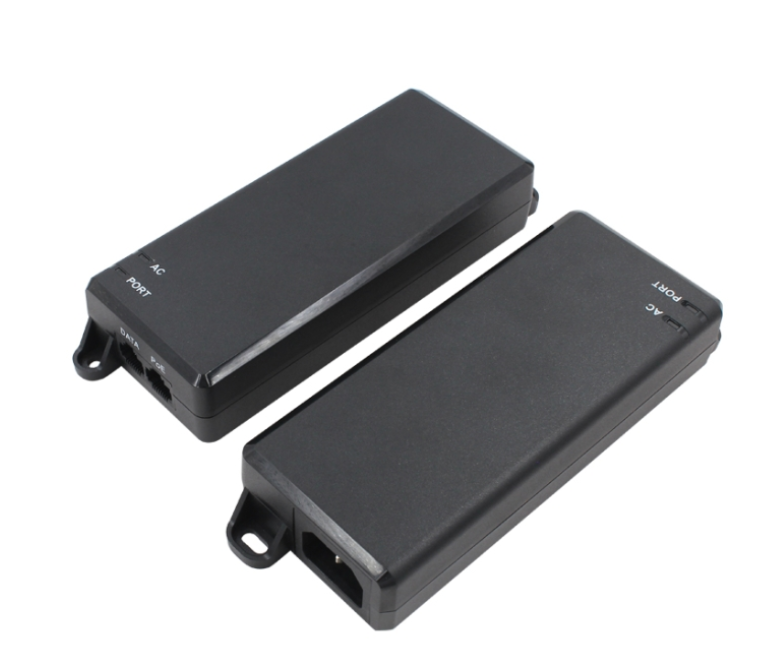
Power over Ethernet (PoE) technology has changed the way network devices receive power and data. Instead of using separate power cables, PoE systems can deliver electrical power and network communication through one Ethernet cable. This design is widely used in IP cameras, wireless access points, VoIP terminals, and IoT equipment. A common question from engineers and system integrators is whether a POE adapter can adjust power according to different connected devices.
The answer depends on the communication protocol between the power source and powered device. Modern PoE solutions can identify device requirements and provide suitable power levels through negotiation. Understanding this process helps buyers select compatible power products for different network applications.
How Does a POE Adapter Adjust Power Output?
A PoE system does not simply send the same amount of power to every connected device. The power adjustment process is based on communication between the power sourcing equipment and the powered device. Through PoE negotiation, the system determines whether the connected equipment supports specific IEEE standards and how much power it requires.
For example, devices following IEEE 802.3af or IEEE 802.3at protocols can communicate their power requirements before receiving full operating power. This allows the power supply system to provide an appropriate output level instead of delivering unnecessary energy.
Power adjustment is also related to the design of the connected equipment. A simple IP terminal may require less power, while devices with additional functions may need higher power levels. The PoE system must match the device requirements while maintaining stable communication.
Understanding PoE Protocols and Power Classification
PoE power adjustment is mainly based on different IEEE standards that define how much power can be delivered between power sourcing equipment and powered devices. These classifications help network engineers select suitable power solutions according to device requirements.
The IEEE 802.3af standard is commonly known as standard PoE and provides up to 15.4W power output from the power sourcing equipment. It is suitable for lower-power devices such as basic IP phones, wireless access points, and simple network cameras.
IEEE 802.3at, also called PoE+, increases the available power level to support devices with higher energy requirements. It can provide up to 30W output from the power source, making it suitable for applications such as advanced wireless access points, video phones, and certain PTZ cameras.
For devices requiring even higher power, IEEE 802.3bt introduces higher power classifications, including Type 3 and Type 4 PoE. These standards can support applications such as high-performance access points, intelligent cameras, and other network equipment with increased power demands.
When selecting a POE adapter, engineers should confirm the supported protocol, available power level, and connected device requirements. Matching the PoE classification with the powered device helps avoid insufficient power supply and improves system stability.
What Role Does a POE Power Adapter Play in Network Applications?
A PoE power adapter works as an important component that combines power supply and Ethernet data transmission. It receives AC input power and converts it into suitable DC power for network devices while maintaining data transmission through the Ethernet connection.
In practical projects, engineers need to consider input voltage range, protection functions, efficiency, and network compatibility. These factors influence whether a power adapter can operate smoothly in different environments, especially in commercial and industrial installations.
The PoE35-560062 from UE Electronic is designed for efficient power and data delivery. It supports AC input voltage from 90-290VAC and complies with IEEE 802.3af/at protocol requirements. The product supports Ethernet transmission from 10Mbps to 10G, including 100Mbps, 1G, 2.5G, 5G, and 10G communication environments.
This model also includes short circuit, over current, and over voltage protection functions. With an average energy efficiency of ≥85%, it helps maintain stable operation during continuous network use. It is suitable for power supply of IP phones, wireless AP, POS equipment, programmable cameras and other network equipment
Why Are Protection and Testing Important for POE Power Adjustment?
Power adjustment is not only about changing output levels. A reliable PoE system also needs protection features to manage unexpected electrical conditions. Short circuits, excessive current, voltage fluctuations, and surge events may affect connected equipment if the power design is not properly verified.
Surge protection is especially important for network equipment installed in different environments. The PoE35-560062 meets a 6KV surge immunity level, helping the adapter handle certain transient electrical conditions during operation.
For PoE applications, verification should focus on both electrical performance and communication stability. Testing helps evaluate whether the adapter can maintain stable power delivery and data transmission when connected with different network devices.
UE Electronic applies verification processes during product development to evaluate electrical performance, compatibility, and reliability for different network applications.
For B2B customers, this capability can help address EMC testing requirements during product development and certification preparation. A complete testing process provides useful support when integrating power products into communication systems.
How Can Engineers Select the Right POE Adapter Solution?
Selecting a suitable PoE product requires checking both power requirements and system compatibility. Engineers should confirm the device protocol, required power level, Ethernet speed, and installation environment before choosing a power solution.
A suitable PoE adapter should match the connected equipment while providing stable operation under expected conditions. Factors such as protection design, efficiency, and EMC performance are important when planning long-term network deployments.
In network deployment projects, customization may involve connector selection, output configuration, enclosure design, or compatibility with specific terminals. These adjustments help system integrators match the adapter with different installation environments.
UE Electronic has accumulated over 30 years of experience in power supply manufacturing and development. Its engineering team can work with customers on specification review, product verification, and design adjustments, while its quality and testing processes support the transition from prototype development to volume production.
Understanding the Future of POE Power Adapter Applications
As network devices become more connected, PoE technology continues to support various communication systems. Applications such as smart buildings, security monitoring, and industrial IoT require stable power and data transmission through compact solutions.
A modern PoE power adapter needs to provide more than basic power conversion. It should support communication standards, protection functions, and reliable performance in different working environments. These requirements make product testing and engineering design important parts of the selection process.
The PoE35-560062 represents a practical approach for network power applications by combining protocol compatibility, protection design, and Ethernet transmission support. Its features allow it to work with multiple PoE adapters and PoE AC adapter scenarios where stable power delivery is required.
For businesses evaluating PoE solutions, understanding power adjustment principles helps create better system designs. For communication and network equipment projects, UE Electronic can assist with power specification review, product testing, and customized design requirements. These services give B2B customers clearer technical information when evaluating power products for their equipment and preparing them for production.
