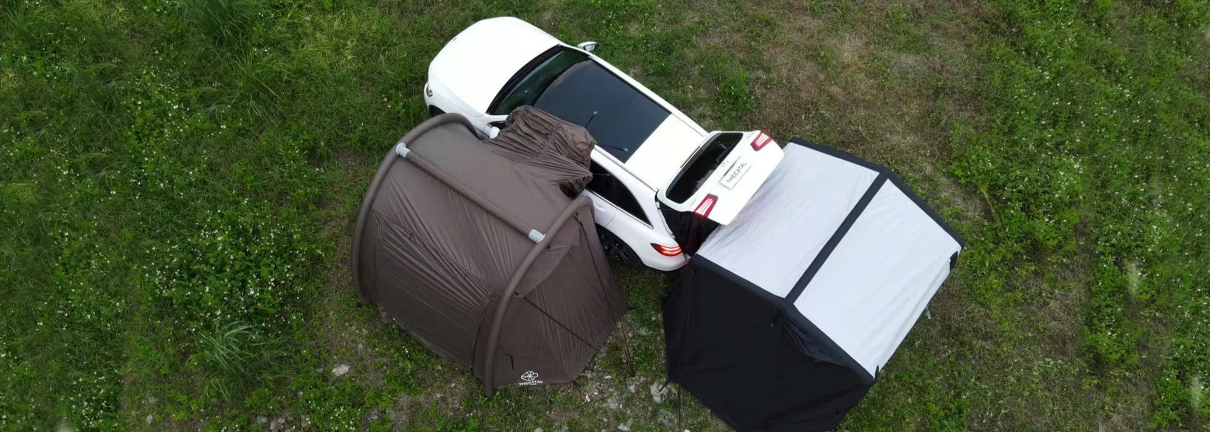
SUVs are increasingly used as mobile platforms for weekend travel, outdoor recreation, and extended road trips. For owners who want to spend more time outdoors without sacrificing basic comfort, a car-connected tent can turn a vehicle into a practical living and storage area. The combination of mobility, shelter, and convenient access makes car camping equipment particularly relevant for modern SUV-based adventures.
Extending the Usable Space of an SUV
One of the main advantages of a vehicle-connected shelter is the additional space it creates. An SUV may provide useful storage and passenger capacity, but its interior is still limited when several people need to sleep, change clothes, organize equipment, or take shelter from changing weather.
A well-designed car camping shelter extends the available space beyond the vehicle itself. Instead of treating the SUV as transportation only, campers can use it as part of the accommodation system. The additional sheltered area can serve as a sleeping zone, covered lounge, gear area, or transition space between the vehicle and campsite.
This is especially useful for families and groups carrying large amounts of camping equipment. More usable space can help reduce clutter inside the vehicle while keeping frequently used items within easy reach.
For example, THECATAL’s Smart Shell provides a 3.5m × 2.5m interior, creating a dedicated sheltered area alongside the vehicle rather than relying entirely on limited SUV cabin space.
Why SUV Owners Benefit from a Car-Connected Design
Traditional standalone tents require users to move repeatedly between the vehicle and the campsite. A vehicle-connected structure can reduce that separation by creating a direct relationship between the SUV and the shelter.
This arrangement can make daily activities more convenient. Campers can access stored equipment without walking through an exposed outdoor area, while wet shoes, jackets, or other gear can be managed in a designated transition space.
For organized vehicle-based camping, car camping equipment can help improve space utilization and create a more efficient campsite layout.Rather than setting up a vehicle and a separate tent as unrelated components, users can create one coordinated outdoor living area.
For SUV owners who frequently travel to different destinations, this flexibility can make car-based camping easier to plan and adapt.
The Smart Shell is designed to connect with both electric and gasoline vehicles and can be configured as a rear tent, side tent, or standalone shelter, giving SUV owners more than one way to use the same system.
Creating More Comfortable Sleeping Arrangements
Sleeping inside an SUV may work for short trips, but space can become restrictive for longer stays. A connected tent provides additional room for mattresses, sleeping bags, bedding, and personal items.
The extra interior area can also provide greater flexibility for different sleeping arrangements. Parents traveling with children, couples bringing additional gear, or friends sharing a campsite may appreciate being able to divide activities between the vehicle and the shelter.
Comfort is not only about floor space. Ventilation, access, standing room, and the ability to move around without constantly rearranging equipment all affect the camping experience. A larger connected shelter can address several of these practical concerns simultaneously.
Improving Weather Protection
Weather is one of the biggest variables in outdoor travel. Rain, wind, strong sunlight, and changing temperatures can quickly make an exposed campsite uncomfortable.
A car-connected shelter offers an additional covered area where campers can prepare meals, organize equipment, change clothing, or simply take a break. The SUV can also function as a protected extension of the overall campsite.
However, users still need to consider the conditions of each destination. Proper anchoring, suitable site selection, ventilation, and manufacturer recommendations remain important when setting up any outdoor shelter.
For frequent travelers, having a structured shelter system can make it easier to prepare for different weather conditions without carrying several completely separate accommodation solutions.
Making Campsite Organization Easier
A well-organized campsite can make outdoor travel considerably more efficient. Without enough dedicated space, bags, cooking equipment, clothing, and recreational gear may quickly become scattered around the vehicle.
A connected tent can provide clearly defined areas for different activities. The SUV can retain its role as a secure storage and transport space, while the tent accommodates sleeping, relaxing, or social activities.
This separation can also make packing easier at the end of a trip. When equipment has designated locations, campers can identify what needs to be stored in the vehicle and what belongs in the shelter system. For people who camp regularly, this organization can save time during both setup and departure.
Choosing the Right Car Tail Tent
Not every vehicle-connected shelter is suitable for every SUV. Buyers should consider vehicle dimensions, rear-door design, attachment methods, available campsite space, and the number of people who will use the shelter.
The term car tail tent generally refers to a shelter that connects around the rear area of a vehicle, creating an extended covered zone. This arrangement can be particularly practical for SUVs because the rear opening provides convenient access between the vehicle and tent.
Portability also matters. SUV owners may travel across different regions, so packed size, weight, setup procedure, and storage requirements should be considered before purchase. A shelter that is difficult to transport or assemble may reduce the convenience that car camping is supposed to provide.
Smart Shell weighs 26 pounds (12kg) and can be fully set up in about 3 minutes, giving SUV owners a concrete reference for evaluating the balance between shelter capacity, portability, and deployment speed.
Supporting Different Types of Outdoor Travel
SUV camping is not limited to traditional weekend trips. Vehicle-based shelter systems can support road trips, family vacations, outdoor photography, fishing, hiking, sporting events, and longer stays at remote destinations.
This flexibility gives SUV owners another reason to consider a connected tent. Instead of purchasing separate accommodation systems for different activities, they can select a shelter that adapts to a broader range of outdoor situations.
THECATAL focuses on outdoor equipment that combines mobility with practical use, making this type of vehicle-oriented shelter part of a wider approach to modern outdoor recreation.
For users who frequently travel by SUV, adaptability can be more valuable than choosing a product designed for only one specific activity.
Maintenance and Long-Term Use
Regular maintenance is essential for any frequently used outdoor shelter. After each trip, the tent should be cleaned according to manufacturer recommendations and dried completely before storage. Moisture left inside packed fabric can create avoidable problems over time.
Users should also inspect attachment points, seams, zippers, poles, guylines, and other components. Any visible wear should be addressed before the next trip.
Storage is equally important. Keeping the shelter dry and properly packed can help maintain its condition between adventures. A simple pre-trip inspection can also prevent small issues from becoming inconvenient problems at the campsite.
Turning an SUV Into a More Flexible Outdoor Base
For SUV owners, a car-connected shelter can expand available living space while keeping transportation and accommodation integrated into one system. It can support sleeping, storage, relaxation, and weather protection while reducing the limitations of a vehicle-only setup.
THECATAL’s focus on practical outdoor products illustrates how vehicle-based camping can evolve beyond simply placing a conventional tent beside an SUV. By combining mobility, usable space, and thoughtful design, THECATAL offers a reference point for SUV owners looking for a more flexible approach to outdoor travel.
