Selecting the right backup power solution requires businesses and homeowners to consider more than generator capacity. Fuel availability, operating environment, maintenance requirements, and power stability all influence whether a specific generator can meet long-term needs. When comparing an LPG generator with a portable generator with inverter technology, buyers should evaluate how each option performs in different applications, from emergency backup to outdoor power support.
Understanding the Difference Between LPG Generator and Portable Generator With Inverter
A generator’s fuel type and power technology are two different factors that affect performance. An LPG generator uses liquefied petroleum gas as its primary fuel source, offering an alternative to traditional gasoline operation. LPG is commonly valued for cleaner storage, longer shelf life compared with gasoline, and reduced concerns about fuel degradation during extended storage periods.
A portable generator with inverter technology focuses on power quality and operating efficiency. Inverter generators convert generated electricity into DC power and then back into stable AC power, helping provide cleaner electricity with lower harmonic distortion. This makes them suitable for applications involving sensitive electronics, including communication equipment, computers, and household devices.
Fuel Type vs. Inverter Technology: What Matters Most?
When comparing an LPG generator with a portable generator with inverter technology, it is important to understand that fuel type and power technology serve different purposes. LPG determines the energy source used to operate the generator, while inverter technology affects how electricity is processed and delivered to connected devices.
An LPG generator can be a practical choice for users who prioritize fuel storage convenience and access to liquefied petroleum gas. However, choosing LPG alone does not guarantee stable power output or make a generator suitable for sensitive electronics. These factors also depend on the generator’s design and electrical technology.
A portable generator with inverter technology, on the other hand, is designed to provide regulated electrical output that is suitable for many electronic devices. Some inverter generators also support multiple fuel types, allowing users to benefit from both fuel flexibility and improved power quality.
For buyers who need both advantages, a tri-fuel inverter generator can offer a more versatile solution by combining gasoline, LPG, and natural gas compatibility with inverter technology.
Power Quality and Application Requirements
Power requirements vary significantly between users. Construction sites, outdoor events, farms, and workshops often prioritize output capacity and continuous operation. In these situations, generator performance under heavier loads may be more important than compact size.
For applications requiring stable power for electronics, a portable generator with inverter technology may offer advantages. The inverter system helps regulate voltage and frequency more effectively, reducing the risk of unstable electricity affecting connected devices. Buyers should therefore identify whether their main priority is high-output operation, sensitive equipment protection, or a balance between both.
Firman WT08500 Provides Flexible Fuel Options
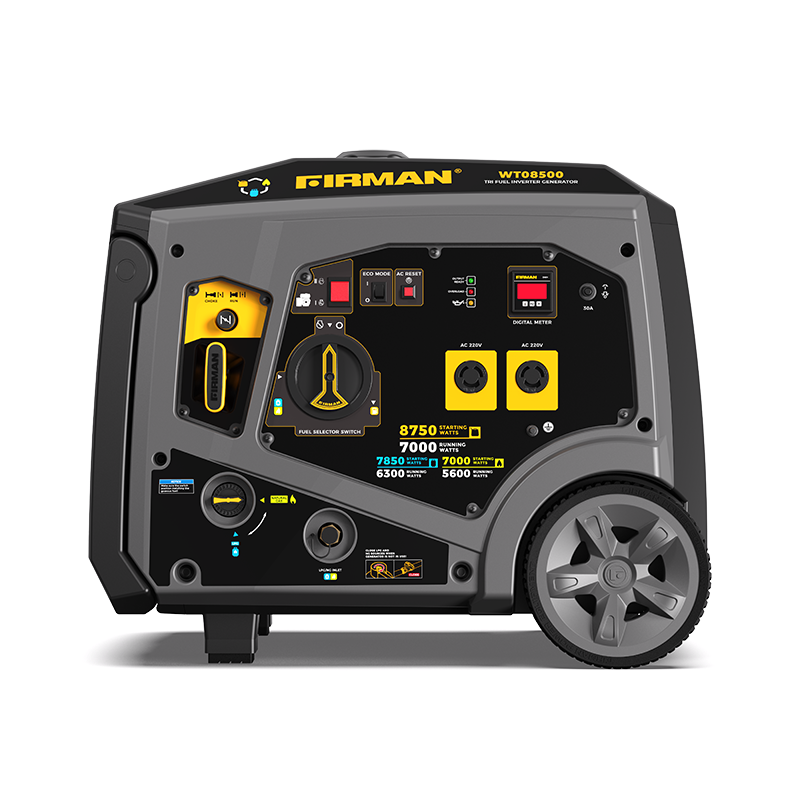
For buyers looking for adaptable backup power equipment, Firman’s WT08500 demonstrates how fuel flexibility can support different operating scenarios. This model is designed as a tri-fuel inverter generator that runs on gasoline, LPG, and natural gas, allowing users to choose the most practical fuel source for outdoor activities or emergency backup situations.
The WT08500 features Firman’s OHV Tri-Fuel engine from the Max-Pro Series, which is engineered for longer service life, reliable performance, and reduced maintenance requirements. Its multi-fuel capability allows users to prepare for different conditions without depending on only one fuel type.
According to Firman’s product specifications, the WT08500 delivers 6.85 kW starting watts and 5.50 kW running watts when operating on gasoline, compared with 6.25 kW starting watts and 5.00 kW running watts on LPG. These output levels make it suitable for supporting essential household loads, outdoor equipment, and various backup power applications where fuel flexibility is important.
Comparing Maintenance and Long-Term Operation
Maintenance requirements can influence the total ownership cost of a generator. Gasoline-powered units may require attention to fuel storage conditions, carburetor maintenance, and regular operation to keep the system ready. LPG and natural gas options can reduce some fuel storage concerns, especially for users preparing for occasional emergency situations.
Regardless of fuel type, regular inspection remains essential. Oil changes, air filter checks, spark plug maintenance, and proper storage procedures help extend generator service life. Businesses purchasing generators for repeated use should also consider the availability of technical support and replacement components.
Selecting the Right Generator Supplier
For commercial buyers, choosing reliable power equipment manufacturers is as important as selecting the generator model itself. A supplier’s engineering capability, product range, quality control process, and after-sales support can directly affect long-term equipment performance.
Companies purchasing generators for rental services, construction operations, hospitality facilities, or emergency response should evaluate more than initial specifications. warranty policies, maintenance guidance, and customer support should all be considered during supplier selection.
Which Fuel Solution Fits Different Needs?
The choice between an LPG generator and a portable generator with inverter technology depends on the specific operating environment. Users prioritizing fuel storage flexibility, multiple fuel sources, and emergency readiness may find tri-fuel solutions more practical. Meanwhile, users who mainly need compact equipment and cleaner power output for sensitive electronics may prefer inverter-focused designs.
The growing demand for flexible backup power has encouraged manufacturers to combine multiple advantages in one product category. Modern generators can now provide fuel adaptability, improved efficiency, and reliable output for a wider range of applications.
Making a Practical Power Investment
A suitable generator should match the user’s actual requirements rather than simply selecting the highest-rated model. Fuel availability, power demand, equipment sensitivity, operating frequency, and maintenance expectations all contribute to the final decision.
Firman‘s WT08500 offers a balanced approach by combining tri-fuel capability with inverter technology. With gasoline, LPG, and natural gas compatibility, a Max-Pro Series OHV Tri-Fuel engine, and LPG output of 6.25 kW starting watts and 5.00 kW running watts, it provides businesses and homeowners with a flexible option for backup and outdoor power needs. Evaluating these factors helps buyers choose a generator solution that delivers dependable performance in changing conditions.
