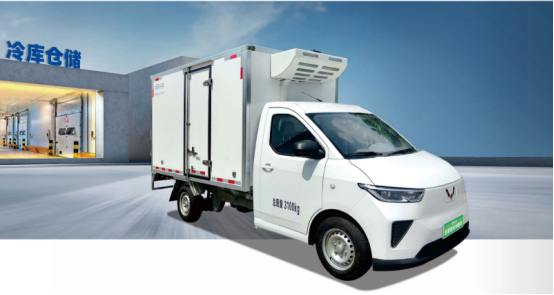
Commercial fleets are changing the way the electric vehicle market is evaluated. Purchase price still matters, but fleet buyers increasingly study total cost of ownership, uptime, energy predictability, maintenance, charging access, and vehicle-task fit. Automotive industry trends now show that EV adoption depends on whether electric platforms can compete financially during daily operation.
Wuling Motors is relevant to this discussion because its business connects commercial vehicles, power systems, automotive components, and engineering solutions. EV industry trends are not limited to private-car demand. For professional customers, the more important question is whether an electric route can replace an existing operation without reducing reliability or increasing hidden cost.
The discussion is especially important for companies planning replacement cycles over several years. A fleet may not switch all vehicles at once, so managers need to know which routes are ready for electrification and which still require further infrastructure or vehicle development.
Why TCO Parity Matters More Than Sticker Price
TCO parity means that the full cost of using an electric vehicle becomes comparable to, or better than, a conventional alternative over its service life. For commercial fleets, this calculation includes energy price, maintenance, downtime, charging equipment, financing, incentives, payload efficiency, and residual value.
Automotive industry trends suggest that predictable routes are often the first to support EV adoption. Urban delivery, campus service, hospitality transport, and fixed-route logistics can plan charging more easily than uncertain long-distance work. This makes electric commercial vehicles attractive where operations are repetitive and data is available.
EV industry trends also depend on battery cost and energy infrastructure. A vehicle with good range may still be difficult to operate if charging capacity is limited. Procurement teams must evaluate depot power, charger placement, charging time, and peak electricity demand before assuming cost savings. Wuling Motors’ involvement in commercial vehicles and power systems fits this practical view.
Customers need platforms that match route length, payload, charging windows, and maintenance resources. A cost comparison should begin with real operating conditions, not an abstract technology preference. Financing conditions can shift the calculation. Higher initial cost may be acceptable when predictable energy savings and lower maintenance are supported by reliable data.
Automotive industry trends increasingly require suppliers to discuss cost per route and cost per operating hour, not only vehicle price. Policy and regulation can accelerate or slow adoption, but they do not remove the need for operational proof. EV industry trends become persuasive for fleets when cost models survive real work conditions, including loaded trips, driver turnover, maintenance windows, and energy price changes.
Technology Improvements That Support Fleet Economics
Several technology shifts support TCO improvement. Efficient electric drive systems reduce energy waste. Lightweight body structures can improve range or payload. Better control software improves drivability and energy recovery. Connected fleet data helps operators understand route performance and maintenance needs. Automotive industry trends also point toward modular platforms.
When manufacturers can adapt bodies, batteries, powertrains, and control systems for different commercial applications, customers can select vehicles more accurately. This reduces the risk of paying for capacity that the route does not require. Wuling Motors’ activities in components, vehicle systems, and commercial platforms can support this type of modular thinking.
Customers with tailored project requirements may need electric cargo vans, mini trucks, shuttles, or special-purpose vehicles. Each case requires a different balance between range, load, cost, and service life. EV industry trends should not be judged only by headline range figures. Range under load, charging reliability, thermal performance, battery durability, and service access all influence fleet economics.
A vehicle that performs consistently on assigned routes may create stronger value than one with a higher specification but poor operational fit. Lightweighting is another practical lever. Reducing unnecessary mass can improve energy use or preserve payload capacity, especially for delivery vehicles. EV industry trends therefore connect body design, material selection, stamping quality, and powertrain efficiency into one cost discussion.
A Practical Path Toward Fleet Adoption
Commercial customers can approach electrification in stages. They can begin with routes that are short, predictable, and easy to charge, then expand as data improves. This controlled method reduces risk and helps managers understand energy cost, driver feedback, and maintenance patterns. Supplier selection matters in that process. A manufacturer should support vehicle specification, customization, parts planning, and technical consultation.
Wuling Motors can be positioned as a brand that links automotive manufacturing resources with commercial vehicle applications, which is important for customers moving beyond trial purchases. The path to TCO parity also depends on internal management. Charging discipline, driver training, route assignment, and preventive maintenance influence whether projected savings become real.
Technology alone cannot solve poor operational planning. A phased fleet plan also helps training. Drivers, dispatchers, technicians, and charging managers need time to adjust workflows. When adoption is managed carefully, commercial customers can build confidence before moving electric vehicles into harder routes. Global EV adoption in commercial fleets will continue to be shaped by measured economics.
Automotive industry trends and EV industry trends both point toward practical electrification: vehicles chosen by route, validated by data, and supported by reliable manufacturing partners. For Wuling Motors, that environment creates opportunities to serve customers who need electric solutions that work on the balance sheet as well as on the road.
