The global energy storage sector is currently navigating a period of profound technological transition. For decades, traditional lead‑acid and lithium‑based chemistries have supported global energy needs, powering everything from everyday consumer electronics to large‑scale commercial grid storage.
However, as the demand for sustainable, resilient, and cost‑effective energy solutions intensifies, industries are actively evaluating alternative chemistries that rely on highly abundant raw materials. Among these emerging technologies, the NFPP sodium‑ion battery is gathering considerable momentum. Valued for its distinct structural properties, this technology is drawing interest as a highly capable solution for demanding sectors.
Understanding the underlying mechanisms that govern its cycle life and safety provides valuable insight into its growing adoption across automotive manufacturing and industrial backup power applications.
Decoding the Polyanionic Framework
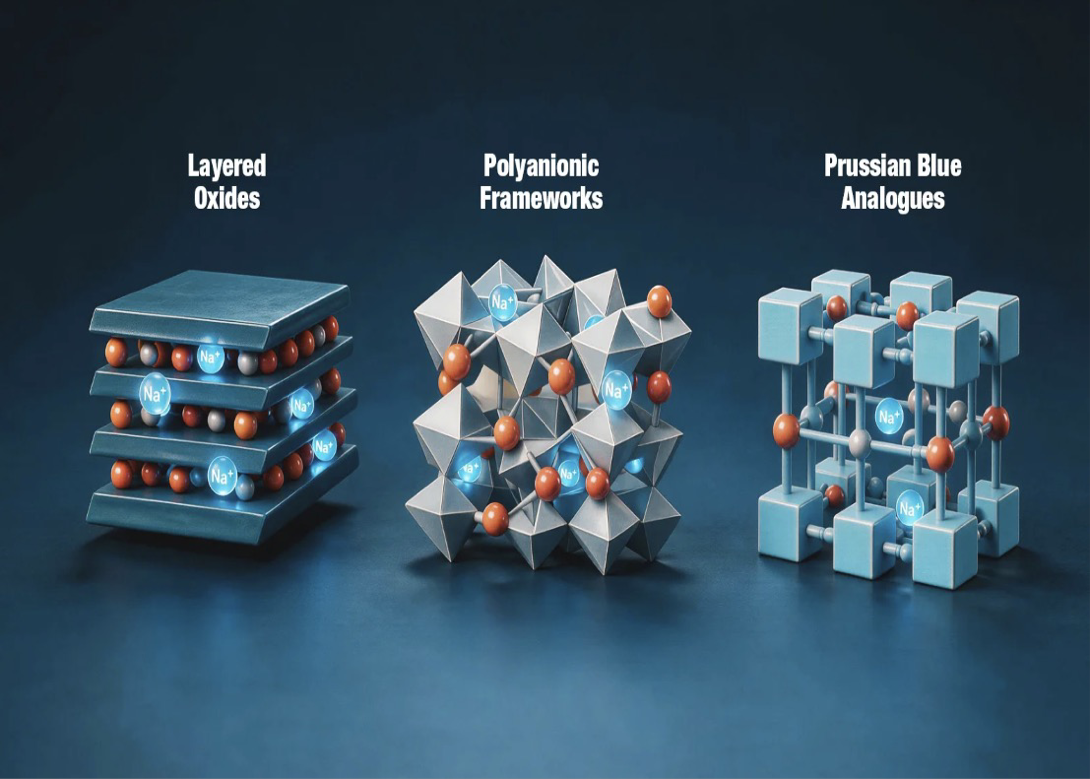
To appreciate the performance characteristics of this emerging energy storage solution, it is necessary to examine its chemical architecture. NFPP stands for sodium iron phosphate‑pyrophosphate. Unlike certain layered oxide structures that can experience degradation under repeated mechanical and electrical stress, NFPP utilizes a highly stable three‑dimensional open framework.
This specific structural design features wide ion‑transport channels that facilitate the rapid movement of sodium ions during both charge and discharge cycles. Because sodium ions are physically larger than lithium ions, accommodating their movement without causing structural fatigue has historically been a complex engineering challenge.
The NFPP framework addresses this by maintaining remarkable dimensional stability. As ions continuously intercalate and de‑intercalate, the crystalline lattice undergoes minimal volume expansion or contraction. This structural integrity directly translates to enhanced physical durability and longevity, particularly under heavy operational loads.
Examining Cycle Life and Deep‑Cycle Capabilities
For automotive fleet operators and commercial facility managers, the operational lifespan of a battery heavily dictates the total cost of ownership and maintenance frequency. The intrinsic structural stability of the NFPP chemistry delivers promising cycle‑life performance, with select commercial variants showing performance that outperforms many traditional lead‑acid equivalents commonly deployed in comparable real‑world applications.
Because the internal architecture resists the rapid degradation typically associated with continuous charging and discharging, the battery demonstrates strong deep‑cycle capability.
In practical terms, this robust cycle life proves highly advantageous for high‑demand scenarios such as automotive start‑stop systems. Modern internal combustion vehicles equipped with start‑stop functionality subject their batteries to continuous micro‑cycling, requiring sudden, high‑current power bursts to restart the engine repeatedly at traffic lights.
While conventional absorbent glass mat (AGM) batteries manage these demands adequately, Aeson Power’s NaForce SS sodium‑ion product, under defined test conditions, is designed to withstand up to 180 000 start‑stop micro‑cycles, helping to maintain reliable function across a vehicle’s service lifetime. Furthermore, its rapid charge acceptance allows it to efficiently recapture energy between engine starts, ensuring reliable high‑rate performance.
Unpacking Safety Metrics and Thermal Resilience
Safety remains a paramount concern for any energy storage deployment, particularly within high‑density installations like commercial data centres or within the confined, heat‑intensive engine bays of passenger cars. The NFPP chemistry demonstrates inherent thermal stability, characterized by strong covalent bonds within its phosphate framework.
These bonds require significantly higher thermal energy to break compared to many alternative chemistries, meaning the onset temperature for thermal runaway is substantially elevated. During rigorous industry abuse testing, such as nail penetration or internal short circuits, these batteries generally exhibit a contained response, lacking the violent oxygen release that can trigger severe thermal events in other battery types.
Equally important to its safety profile is its remarkably wide operating temperature window. Certain energy storage systems suffer profound performance degradation in extreme climates, sometimes requiring complex external active heating or cooling circuits to function safely. An NFPP‑based battery typically maintains strong operational integrity across a broad environmental spectrum, reliably functioning from as low as -30 °C up to an intense 80 °C. In sub‑zero environments, the high ionic mobility of sodium is preserved, allowing for consistent cold‑cranking power without the risk of dangerous metal plating.
Conversely, the chemical stability suppresses volatile reactions in extreme heat, vastly simplifying thermal management requirements.
Strategic Applications Across Multiple Sectors
The intersection of extended cycle life and rigorous safety naturally positions this chemistry as a strong candidate for several distinct commercial and residential applications. In Uninterruptible Power Supply (UPS) systems, reliability is completely non‑negotiable. Critical infrastructure requires immediate, high‑rate power delivery during grid outages, combined with an absolute assurance against fire hazards. The NFPP framework provides this instantaneous backup power safely, with a sustained lifespan that reduces the frequency and cost of battery replacement cycles.
Similarly, the automotive industry benefits greatly from these characteristics. Beyond standard start‑stop applications, modern passenger cars require resilient auxiliary batteries to power critical low‑voltage safety equipment, lighting, and internal control systems. A battery capable of delivering consistent performance in extreme weather, whilst resisting degradation over thousands of cycles, presents a highly practical solution.
Beyond these core areas, the deep‑cycle capability of this chemistry also proves highly advantageous for residential household energy storage and off‑grid energy storage solutions, where daily reliable charging and discharging are essential.
Partnering for Next‑Generation Energy
Transitioning to advanced energy frameworks requires a manufacturing partner capable of delivering consistent quality, scalable production, and proven technical expertise. Operating as an Australian innovator, Aeson Power develops custom sodium‑ion technical solutions built to match these industry requirements.
Supported by a strategic partnership with the Xupai Group, they bring decades of relevant manufacturing experience to the market. Their product portfolio includes reliable sodium‑ion solutions, automotive starting batteries and UPS systems, all built to meet internationally recognised quality and safety certifications. Readers interested in exploring real‑world deployments of this technology can learn more about Aeson Power’s energy‑storage offerings for infrastructure and automotive use‑cases.
