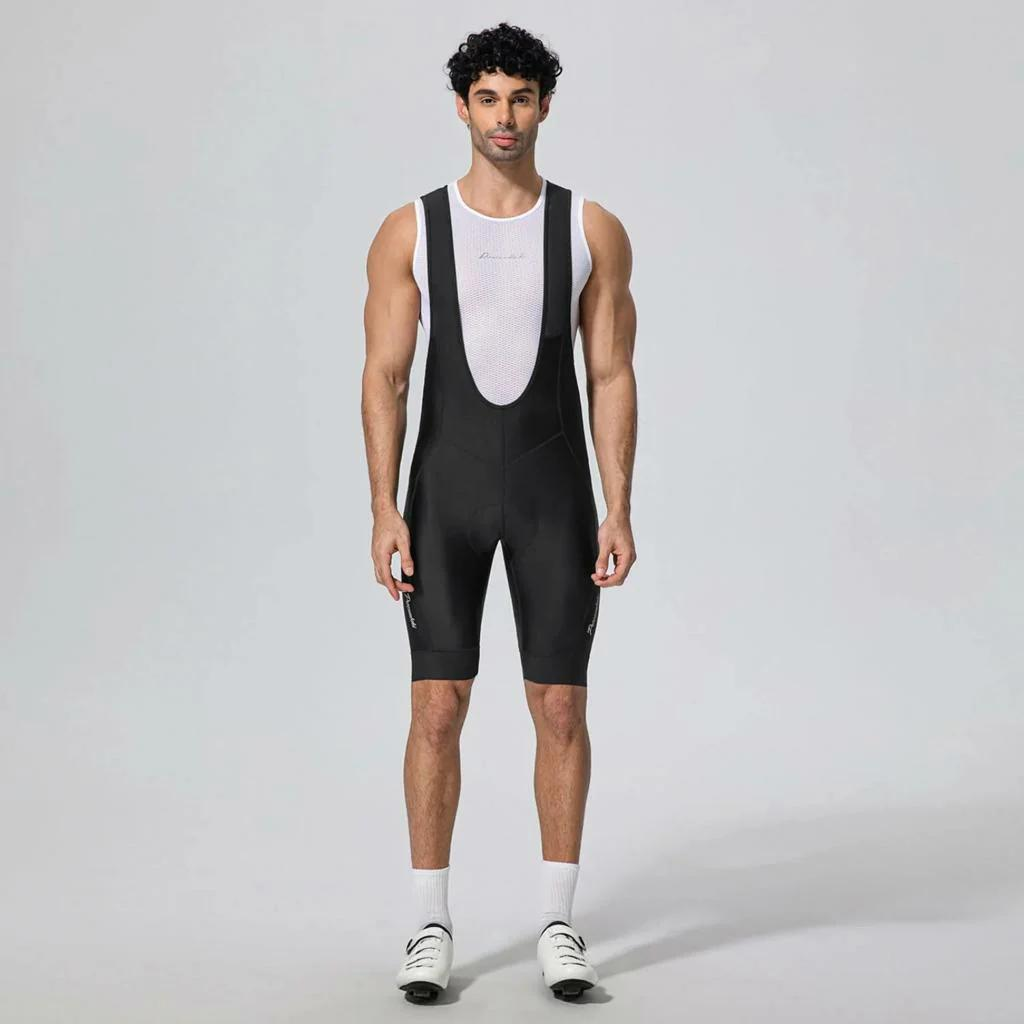
For daily training, cycling clothing does not need to be complicated. Most riders want a pair of bib shorts that feels comfortable when they get on the bike, stays in place while pedaling, and holds up after repeated washing and riding. That makes the choice less about chasing the newest design and more about finding dependable equipment that fits the way you actually ride.
A good pair of classic bib shorts can make sense for riders who alternate between road training, gravel routes, indoor sessions, and shorter weekend rides. The key is to look closely at the chamois, fabric, straps, leg grippers, and overall construction rather than judging a bib simply by its appearance.
What Makes a Bib Short Suitable for Daily Training?
The Men’s Classic Cycling Bib Shorts from Przewalski are designed around this type of use. The product page describes them as a core option for everyday cycling, training, commuting, and indoor riding, with an intended riding time of up to four hours. Their all-terrain chamois is designed for road, gravel, trail, and training rides, making the shorts more versatile than a garment built around only one riding style.
The 12-panel construction is another practical detail. Instead of relying on a simple cut, the panels control stretch around different areas of the body, helping the garment follow changes in riding position. This matters during training because cyclists rarely remain completely static. A rider may sit upright during an easy section, lean forward on a faster road, or stand briefly on a climb.
The main fabric consists of approximately 71% nylon and 29% elastane, while the mesh uses 84% nylon and 16% elastane. The combination gives the garment stretch for movement while allowing the mesh sections to provide additional airflow.
Chamois, Straps, and Fit Matter More Than Appearance
The chamois is usually the first thing riders should consider when choosing bib shorts for repeated training. Padding that is too thin can leave pressure points noticeable after a long session, while simply adding more thickness does not automatically make a pad better. The shape and density need to work with the rider’s position.
These bib shorts use an 18 mm zoned chamois with foam densities of 30/90/90/30 kg/m³. The sit-bone area uses a four-layer structure, while the perineal area uses a three-layer structure. The higher-density foam is positioned where additional support is needed, while the outer layers help create a smoother transition. The chamois is also perforated to improve airflow and reduce heat and moisture buildup.
For daily training, stability is equally important. A chamois that shifts while pedaling can create friction and make the rider constantly adjust position. The product uses herringbone stitching to help keep the pad stable, while the 6 cm silicone leg grippers are designed to reduce leg ride-up and unwanted pad movement. The grippers have a listed silicone density of 68%.
The bib straps deserve attention too. These shorts use 6 cm breathable mesh straps, with the wider construction intended to distribute pressure more evenly across the shoulders. The product specifies 99.9% stretch recovery for the straps, helping them maintain their shape through seated, standing, and aerodynamic positions. For riders training several times a week, this kind of consistency can be more valuable than a visually impressive design.
Why Construction and Fabric Choice Matter Over Time
The Classic Cycling Bib Shorts use four-needle, six-thread stitching across the panel seams. The flat construction is intended to keep the seams smooth against the skin while providing strength and flexibility. That can help reduce the rubbing that becomes noticeable when a cyclist spends several hours moving continuously.
Moisture management is another consideration for regular training. The product lists moisture absorption of at least 200% and a quick-dry rate of at least 0.25 g/h. Combined with the breathable mesh, these properties are intended to help move sweat away from the skin and reduce the damp, clingy feeling that can develop during harder sessions.
The garment is also described as suitable for spring and fall riding, with leg warmers suggested for winter use. That makes it particularly practical for cyclists building a regular training wardrobe rather than buying clothing for a single season.
For riders who want a dependable everyday option, men’s classic bib shorts can therefore be a sensible starting point. Their purpose is not to provide an extreme race setup, but to balance cushioning, ventilation, flexibility, and durability for recurring training rides.
Choosing Bib Shorts You Will Actually Want To Wear
The best training bib is often the one you stop thinking about once the ride begins. If the chamois remains stable, the straps stay comfortable, the legs do not constantly ride up, and the fabric manages sweat, there is less reason to interrupt a ride for adjustments.
That practical approach is reflected in Przewalski Cycling, whose Classic Cycling Bib Shorts are positioned as a versatile option for everyday riders. The product combines an all-terrain chamois, 12-panel construction, breathable 6 cm bib straps, 6 cm silicone leg grippers, stretch performance fabric, and reinforced stitching.
Ultimately, choosing classic bib shorts is about matching the garment to your routine. If a rider’s training regularly falls within a few hours and includes road, gravel, trail, or indoor riding, a versatile design with stable padding and durable construction can earn its place in the weekly rotation. When comfort remains consistent from the first pedal stroke to the final mile, the clothing has done its job.
