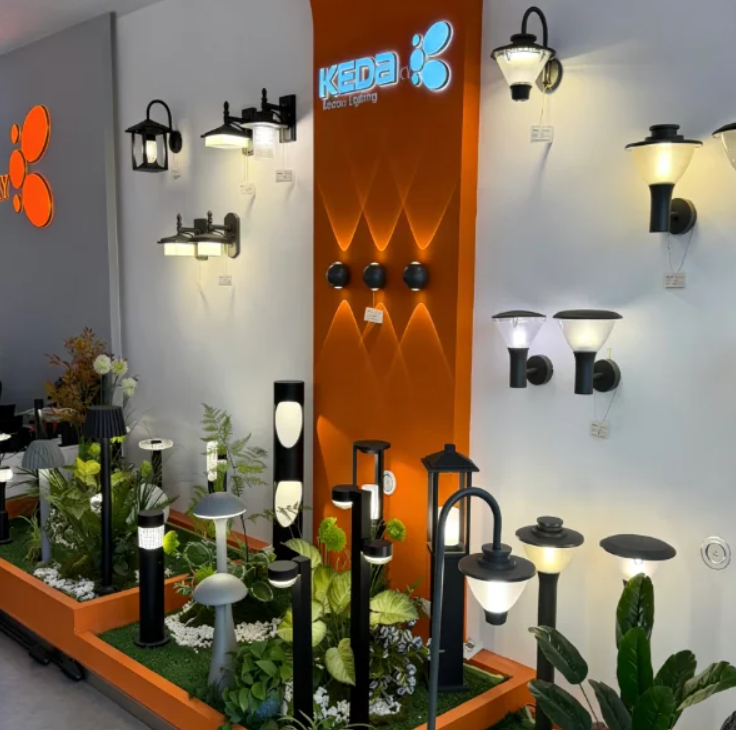
Direct procurement in outdoor lighting often raises a practical question for B2B buyers: whether to work with a factory source or a trading intermediary. In this context, an exterior lighting company typically refers to a manufacturer with in-house design and production capability, while trading channels aggregate multiple suppliers. The difference is often reflected in customization depth, delivery control, and technical consistency across projects.
Procurement Structure in the Outdoor Lighting Supply Chain
In the outdoor lighting sector, supply chains are usually split between integrated factories and intermediaries. Many buyers comparing an exterior lighting company with trading platforms focus on communication efficiency and technical transparency. Factories tend to provide more direct engineering input, while trading firms may offer broader catalog coverage but less control over production details and material selection.
Cost Composition in Exterior Lighting Manufacturers
When evaluating exterior lighting manufacturers, pricing is not only about unit cost but also about tooling, mold ownership, and production scale. Direct factories often spread fixed costs across bulk production, which can stabilize pricing for repeat orders. Trading companies may introduce additional layers of margin, which can influence long-term procurement budgets for large-scale outdoor lighting projects.
Design Control and Product Consistency Factors
Another important factor is design ownership. A direct exterior lighting company usually manages product development internally, from housing structure to optical configuration. This allows better alignment between design intent and production output. In contrast, intermediary channels may rely on existing catalogs, limiting structural adjustments for specific architectural environments or installation constraints.
Manufacturing Capabilities in Exterior Lighting Manufacturers
Many exterior lighting manufacturers operate with integrated workshops that handle metal processing, surface treatment, and assembly in one facility. This structure helps maintain consistency across batches. For example, companies like Keyida operate large production spaces and support private mold development, allowing stable output for modern small outdoor wall lighting systems used in residential and commercial projects.
Material Selection and Durability Considerations
Material choice plays a key role in outdoor performance. A typical exterior lighting company often uses aluminum housings combined with PC or acrylic covers to balance corrosion resistance and light diffusion. This structure supports long-term outdoor exposure. Some manufacturers also apply multi-stage surface treatment before coating to improve adhesion and reduce wear over time.
Product Customization in Exterior Lighting Manufacturers
Customization is another area where exterior lighting manufacturers differentiate themselves. OEM and ODM services allow adjustments in color temperature, lighting modes, and housing color. In many factory setups, features such as CCT adjustment or RGB lighting are integrated during production planning rather than added afterward, improving technical stability and reducing post-assembly variation.
Engineering Support and Technical Documentation
Working with an exterior lighting company often includes access to technical documentation such as 2D drawings, installation guides, and product specification sheets. These materials are essential for engineering teams during project planning. Trading companies may provide basic documentation, but deeper structural data is usually more accessible directly from manufacturing sources.
Smart Function Integration in Exterior Lighting Manufacturers
Modern exterior lighting manufacturers increasingly integrate smart control systems such as PIR sensors and radar detection modules. These features are designed for energy efficiency in outdoor environments like pathways or building facades. Integration at the factory level ensures sensor placement and wiring stability are aligned with the product’s structural design.
Quality Assurance and Certification Systems
Certification standards are a key benchmark in the industry. A reliable exterior lighting company typically follows CE, RoHS, and SAA compliance requirements to meet different regional regulations. These certifications ensure electrical safety and material compliance, especially for export markets in Europe, North America, and the Middle East.
Delivery Scale and Order Flexibility
In terms of logistics, exterior lighting manufacturers often set minimum order quantities depending on product type and customization level. Standard models may allow smaller batches, while customized designs require higher MOQs. This structure helps maintain production efficiency while balancing the flexibility needed for different project sizes.
After-Sales Support and Product Lifecycle
Long-term support is another consideration when selecting an exterior lighting company. Warranty periods and component replaceability, such as LED chips or drivers, influence maintenance costs. Manufacturers that design modular components allow easier replacement, extending product lifecycle and reducing downtime in commercial installations.
Conclusion: Choosing Between Factory and Trading Models
The decision between direct factories and intermediaries depends on project complexity, budget control, and customization requirements. While trading channels offer convenience in sourcing variety, direct exterior lighting manufacturers often provide stronger control over design consistency and production stability. For structured outdoor lighting projects, factory collaboration can better support long-term technical and commercial planning.
