Product developers across apparel, footwear, outdoor equipment, automotive, and industrial applications increasingly face the same challenge: how to improve thermal protection without adding significant thickness or weight. Conventional insulation can provide warmth, but bulk, compression, and moisture management may limit product performance. Low thermal conductivity insulation offers another route by slowing heat transfer more efficiently within a thinner material structure. Y-Warm has developed a flexible nano-closed-cell insulation technology that targets this challenge through a combination of microscopic pore structure, ultra-thin construction, and moisture-management functionality.
Why Pore Structure Matters for Thermal Insulation
Thermal conductivity describes how readily heat moves through a material. For insulation applications, lower thermal conductivity generally means that heat transfer can be slowed more effectively. However, achieving low thermal conductivity is not simply a matter of reducing material thickness. The internal structure of the insulation plays an important role in determining how heat travels through it.
Y-Warm uses a nano-scale closed-cell structure supported by a polyester scaffold. According to the company’s technical documentation, nano-CT analysis reconstructs the material from sequential scans across multiple planes, revealing solid pore walls surrounding isolated pore spaces. The reported pore wall thickness is approximately 20–280 nm, while pore diameters range from 30–190 μm.
This structure provides the foundation for Y-Warm’s low thermal conductivity insulation performance. Rather than depending on a thick layer of conventional filling material, the material is engineered at the microscopic level to reduce the pathways through which heat can transfer.
Nano-Closed Cells Support Ultra-Low Thermal Conductivity
Aerogel is well known for its exceptionally low thermal conductivity, but its mechanical limitations can make integration into flexible products challenging. Y-Warm‘s approach is different: after eight years of research and development, the company developed a flexible synthetic insulation material based on nano-closed-cell technology and N₂. Y-Warm states that its thermal insulation performance is comparable to aerogel while addressing mechanical flexibility requirements. The company reports low thermal conductivity across several test methods, although the measured value varies with the method and sample configuration.
For business buyers, however, laboratory values should not be considered in isolation. Material thickness, compression, construction method, surrounding fabrics, test conditions, and finished-product design can all influence actual thermal performance. Y-Warm itself provides multiple standardized test approaches and performance verification resources for technical evaluation.
Minimal Thickness Without Conventional Bulk
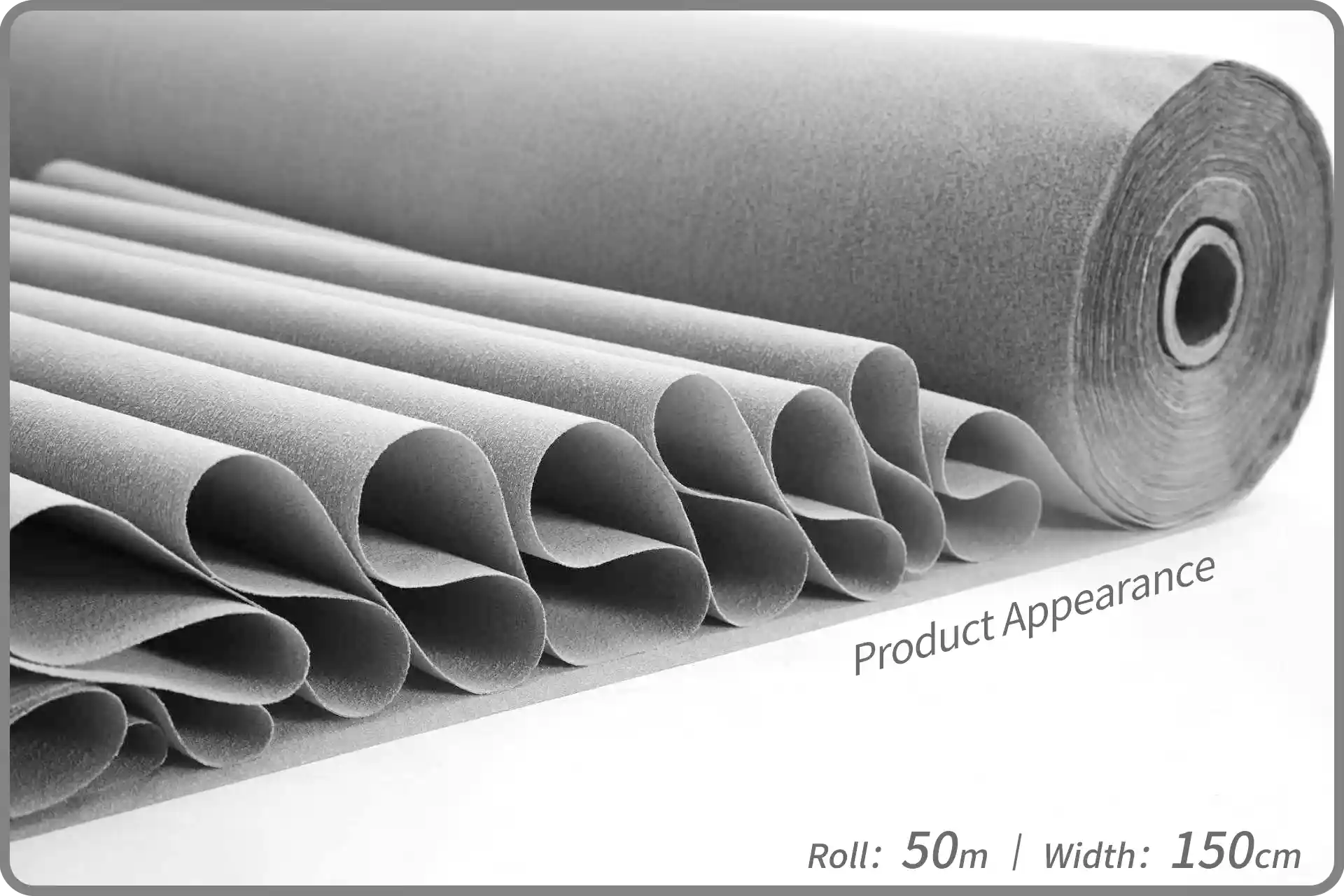
One of the most notable characteristics of Y-Warm is its ability to provide insulation within an exceptionally thin layer. The company states that a single layer of YW-01 at approximately 0.7 mm thickness can provide around 10°C of thermal insulation in suitable apparel applications. When incorporated between outer fabric and lining, the material functions as an insulation layer that slows cold-air conduction and reduces heat loss from the body.
This thin construction can be valuable for manufacturers developing lightweight winter jackets, workwear, footwear, gloves, and other products where excessive insulation thickness affects fit, mobility, packaging, or overall product aesthetics.
Y-Warm’s product portfolio also includes different formulations for specific requirements. YW-01 is designed for applications requiring softness, YW-02 targets products requiring higher thermal insulation performance, YW-03 can support soft-feel areas such as cuffs, and YW-04 is intended for applications requiring both thermal insulation and higher warp and weft strength.
Thermal Insulation Combined with Moisture Management
Reducing heat transfer is only one consideration for products used in active or changing environments. Moisture can influence comfort and drying time, making moisture management particularly important for apparel and footwear.
Y-Warm incorporates hydrophilic groups into its material structure. According to its published performance information, the material’s moisture absorption capacity is nearly twice that of the standard reference sample used in testing. Its evaporation rate is also reported at approximately twice that of standard reference materials, with drying taking around one hour at room temperature after moisture exposure.
This combination gives product developers an opportunity to consider insulation, moisture permeability, and quick drying as interconnected requirements rather than separate material functions.
Where Low Thermal Conductivity Insulation Can Add Value
The potential applications extend beyond winter apparel. Y-Warm identifies footwear, outdoor equipment, tents, comforters, curtains, automotive components, railway applications, aviation, and construction among its potential application areas.
For footwear, for example, the material can be used as an interlayer between the upper and other components through lamination or sewing. In outdoor equipment, its low thickness and lightweight construction can help reduce the carrying burden associated with thermal insulation.
For manufacturers evaluating low thermal conductivity insulation, the broader consideration is therefore not simply how low the thermal conductivity can be, but how effectively the insulation can be integrated into the finished product while preserving its required thickness, flexibility, moisture management, and construction characteristics.
Y-Warm: Advancing Ultra-Thin Thermal Insulation
Y-Warm Technologies Co., Ltd. develops flexible thermal insulation materials based on nano-closed-cell technology. Its technology combines ultra-low thermal conductivity with an ultra-thin structure, moisture permeability, and quick-drying performance, supporting applications ranging from apparel and footwear to outdoor and industrial products.
For product engineers and manufacturers exploring next-generation low thermal conductivity insulation, Y-Warm provides a material platform worth evaluating through application-specific testing and samples. Visit Y-Warm to request a sample, review technical data, and discuss how its ultra-thin insulation technology can fit your next product development project.
